

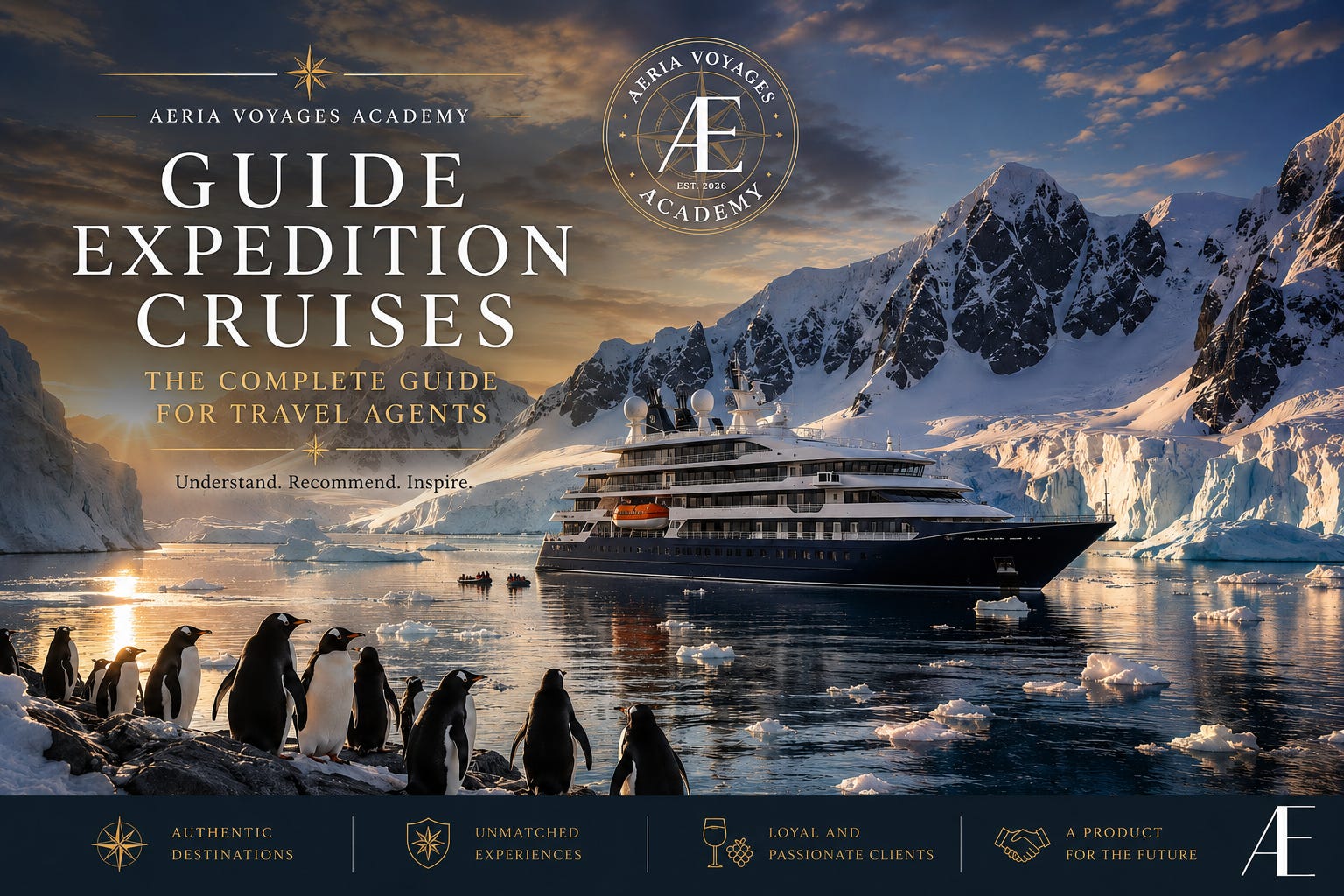
Let’s talk about the client who has done everything.
The Caribbean. The Mediterranean. Alaska. Maybe even a river cruise along the Danube. They’ve seen beautiful places, eaten wonderful food, and come home with good photographs. But somewhere along the way, the word “vacation” started to feel a little thin. They want something that feels genuinely different. Something that stays with them long after the tan fades.
That client exists in almost every agent’s book. And expedition cruising is the answer they didn’t know they were looking for.
Expedition cruising is the fastest-growing segment in the cruise industry, and for good reason. It combines the comfort and logistics of a cruise with destinations so remote and experiences so extraordinary that most people will spend their entire lives never seeing them. Penguins in Antarctica. Polar bears in the Arctic. Ancient temples on the Mekong. Volcanic landscapes in the Galápagos.
And here is the part that should get your attention as an agent: expedition clients are among the most loyal, highest-spending, and most enthusiastic referrers in the entire travel industry.
Get one expedition client right, and you will hear about it for years.
Let’s understand this product properly.
TABLE OF CONTENT
🎧 LISTEN TO THIS SUBJECT LECTURE

What expedition cruising actually is
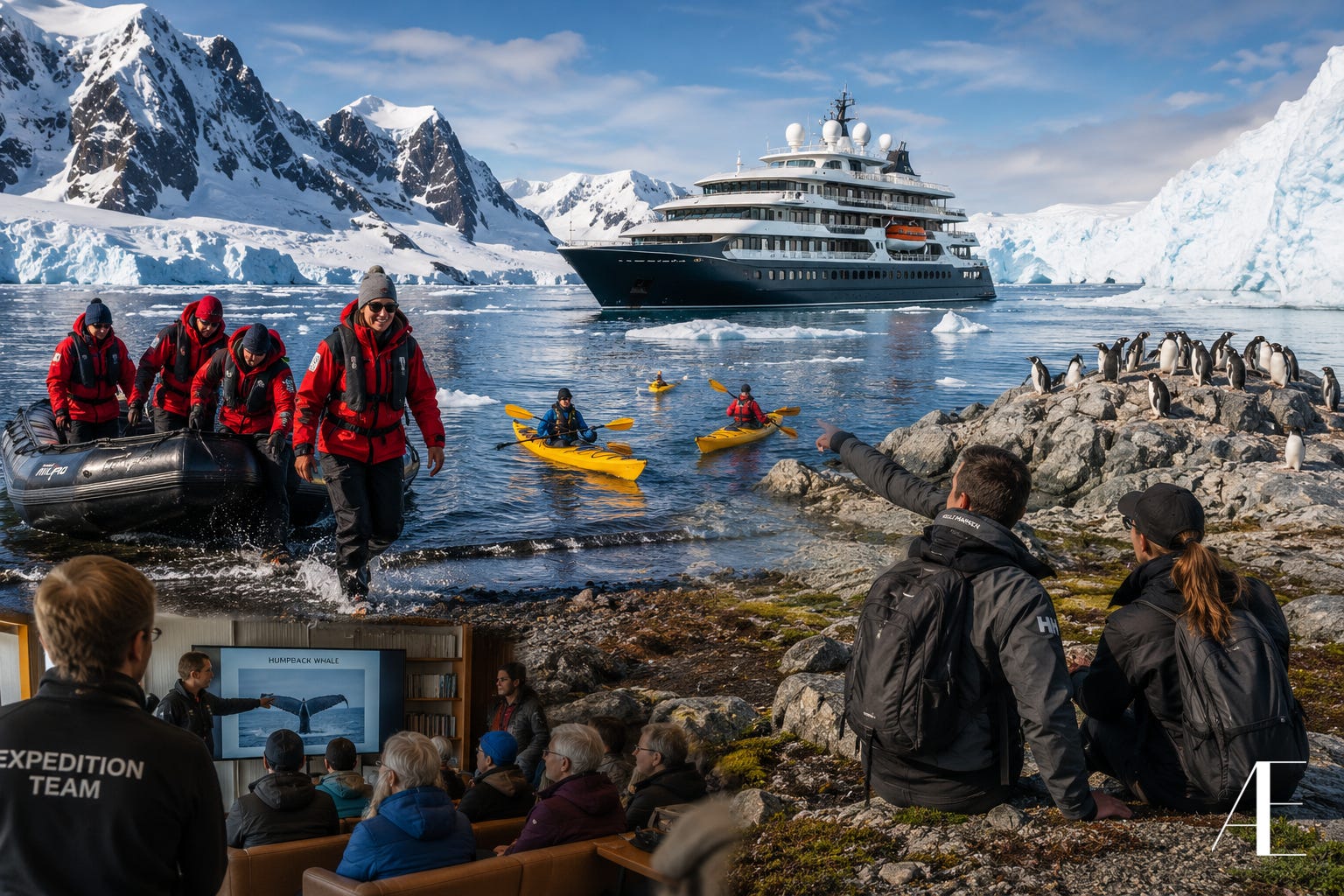
Expedition cruising is not simply a cruise to an unusual destination. It is a fundamentally different kind of travel experience, built around active exploration, wildlife encounters, and deep immersion in some of the world’s most extraordinary natural environments.
The ships are small, typically carrying 50 to 300 passengers, though some newer vessels go slightly higher. They are purpose-built for remote navigation, with reinforced hulls for polar ice, shallow drafts for river and coastal access, and fleets of Zodiacs, kayaks, and sometimes submarines for getting passengers off the ship and into the environment.
The onboard team is different too. Expedition ships carry teams of scientists, naturalists, historians, and local experts who lecture in the evenings and guide excursions during the day. A typical expedition voyage might include a marine biologist, a glaciologist, a wildlife photographer, and an ornithologist, all available to answer questions over dinner.
The pace is intense by cruise standards. Guests typically go ashore twice a day, sometimes more, in all weather conditions. These are not passive shore excursions. Clients wade through shallow water to reach Zodiac landings, hike across tundra, kayak alongside glaciers, and snorkel with sea lions. Expedition cruising requires a certain physical willingness and a genuine sense of adventure.
It is not for every client. But for the right client, it is the most transformative travel experience they will ever have.
