

Let’s talk about the client who has done the Caribbean three times, the Mediterranean twice, and is starting every conversation with “we want something different this time.”
You know this client. We all do.
River cruising is your answer. And once you introduce a client to it, you will rarely have to sell them on it again. They come back on their own, usually with friends in tow.
River cruising is one of the fastest-growing segments in the entire travel industry, and it remains one of the most underutilized products in the average travel agent’s toolkit. That gap between how popular it is becoming and how confidently agents sell it? That is your opportunity.
Let’s close that gap today.
TABLE OF CONTENT
🎧 LISTEN TO THIS SUBJECT LECTURE

What River Cruising actually is
Before we get into companies and itineraries, let’s make sure we’re working from the same definition, because river cruising is genuinely different from ocean cruising in ways that matter to clients.
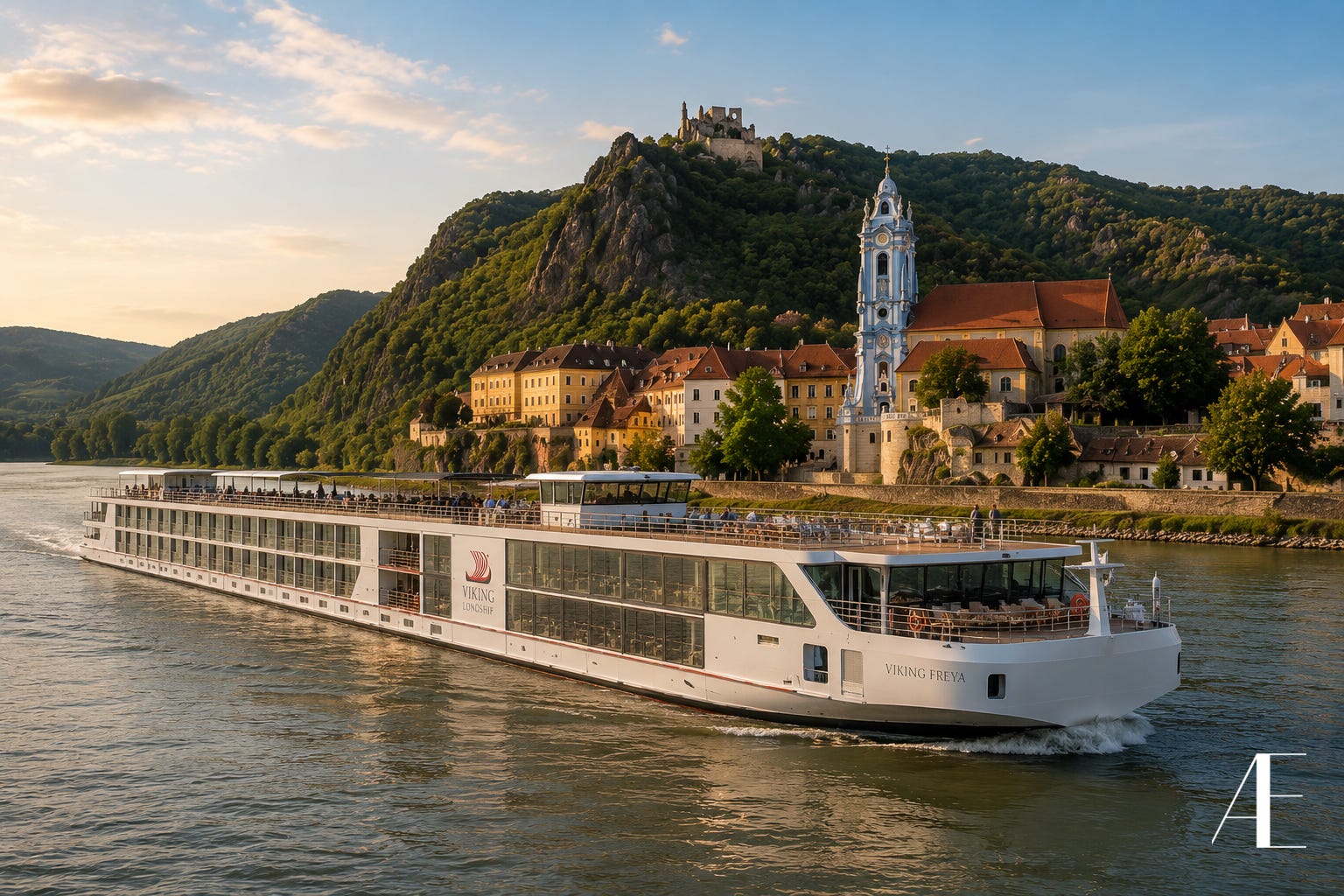
River ships are small. We’re talking 100 to 200 passengers on most vessels, sometimes fewer. There are no waterslides, no casinos, no Broadway shows. What there is instead is something ocean ships simply cannot offer: the ability to dock in the heart of a city or village, steps away from the cathedral, the market, the vineyard.
No tenders. No ports miles from the action. No sea days. You go to sleep in one country and wake up in another, and both times you can walk off the ship and straight into the experience.
The ships themselves are long and narrow, built specifically to navigate rivers and their locks. They typically have one or two decks of cabins, a main dining room, a lounge, a sun deck, and not much else. And that is precisely the point. River cruising is not about the ship. It is about everything on the other side of the gangway.
Who is the river cruise client?
Get this right and you will sell river cruises confidently for the rest of your career.
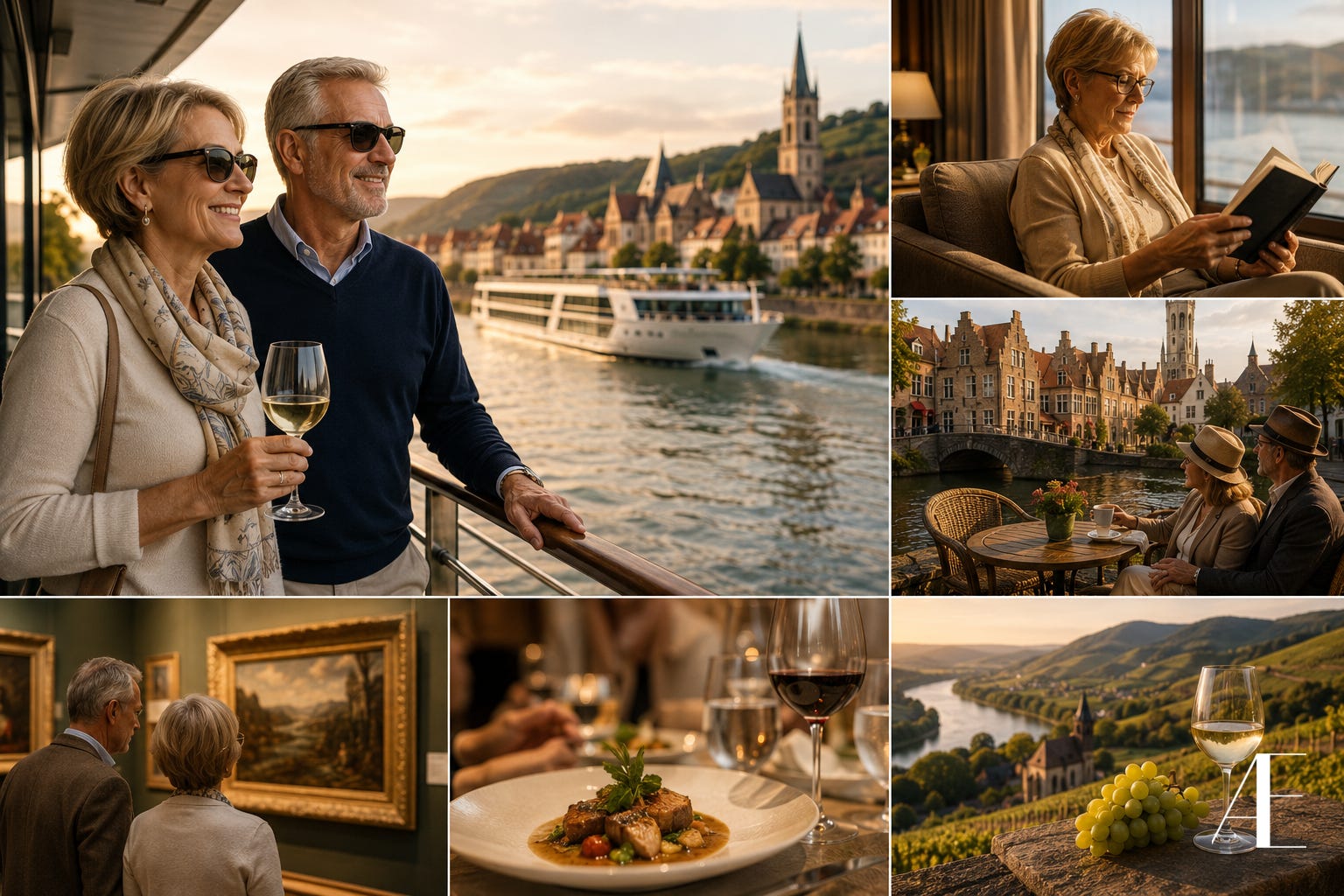
The classic river cruise client is 55 and older, well-traveled, culturally curious, and done with crowds. They have probably already done a few ocean cruises. They liked the convenience but found the ships too big, too loud, or too focused on onboard entertainment rather than the destinations themselves.
They read. They visit museums. They want to sit in a café in Bruges and feel like they actually belong there, not like they are passing through on a schedule. They are interested in history, architecture, local cuisine, and wine. Especially wine.
They travel as couples more often than not, sometimes with another couple or a small group of friends. They are not looking for a kids’ club or a surf simulator. They are looking for an experience that feels curated, unhurried, and genuinely connected to the places they visit.
They also tend to have household incomes that support the price point, because river cruising is not the cheapest way to see Europe. And they book again. And again.
One well-served river cruise client is worth years of repeat business. Introduce them right and they will send you everyone they know.
