
Not All Cruises Are Created Equal
Published by ÆRIA Voyages Academy
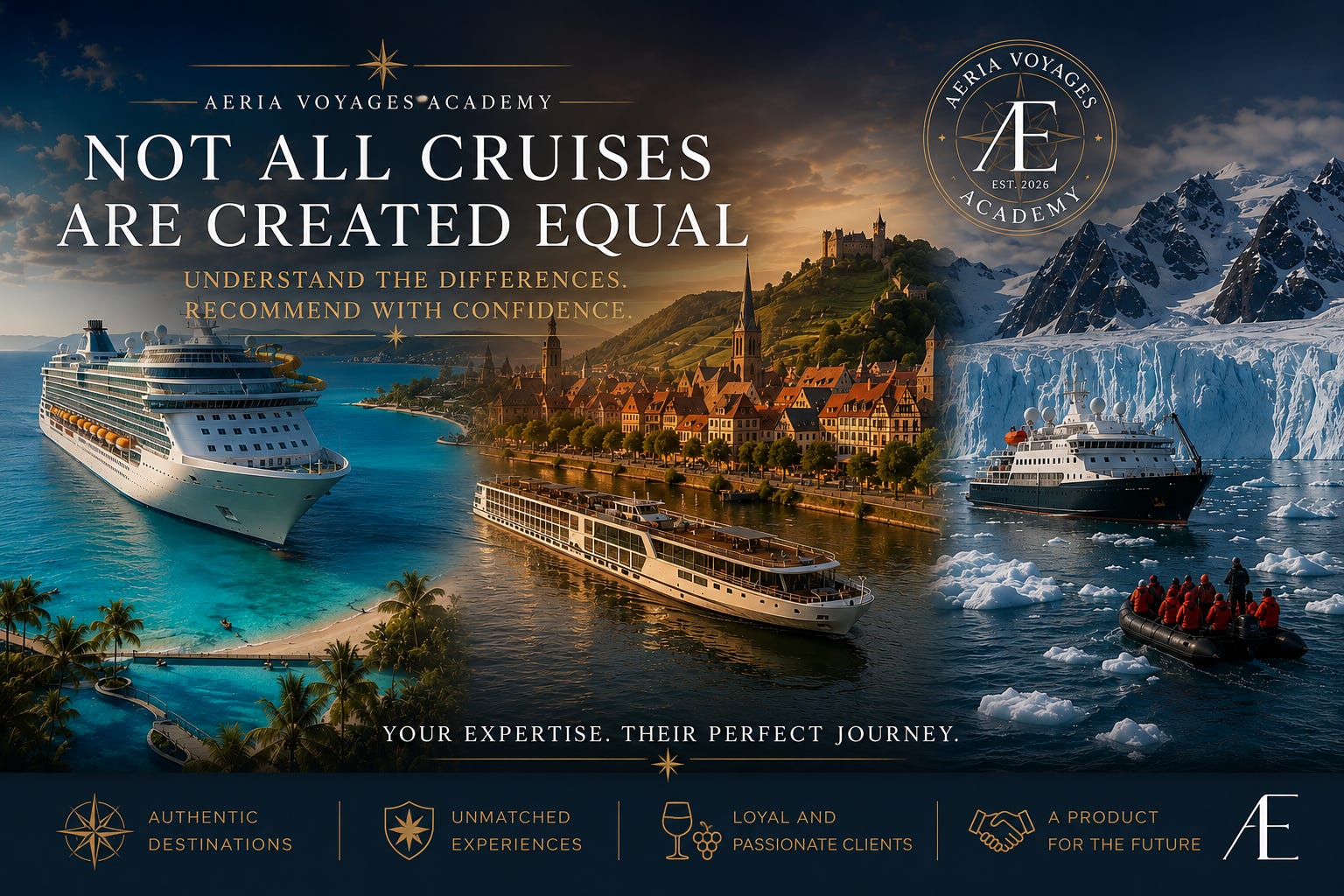
Ask ten people what a cruise looks like and you’ll get ten different answers. A massive ship with waterslides and a casino. A small wooden vessel gliding down the Seine. A rugged expedition boat pushing through Arctic ice.
They’re all cruises. And as a travel agent, knowing the difference is what separates a good recommendation from a great one.
Let’s break it down.
TABLE OF CONTENT
🎧 LISTEN TO THIS SUBJECT LECTURE

Ocean Cruises: The classic, reinvented
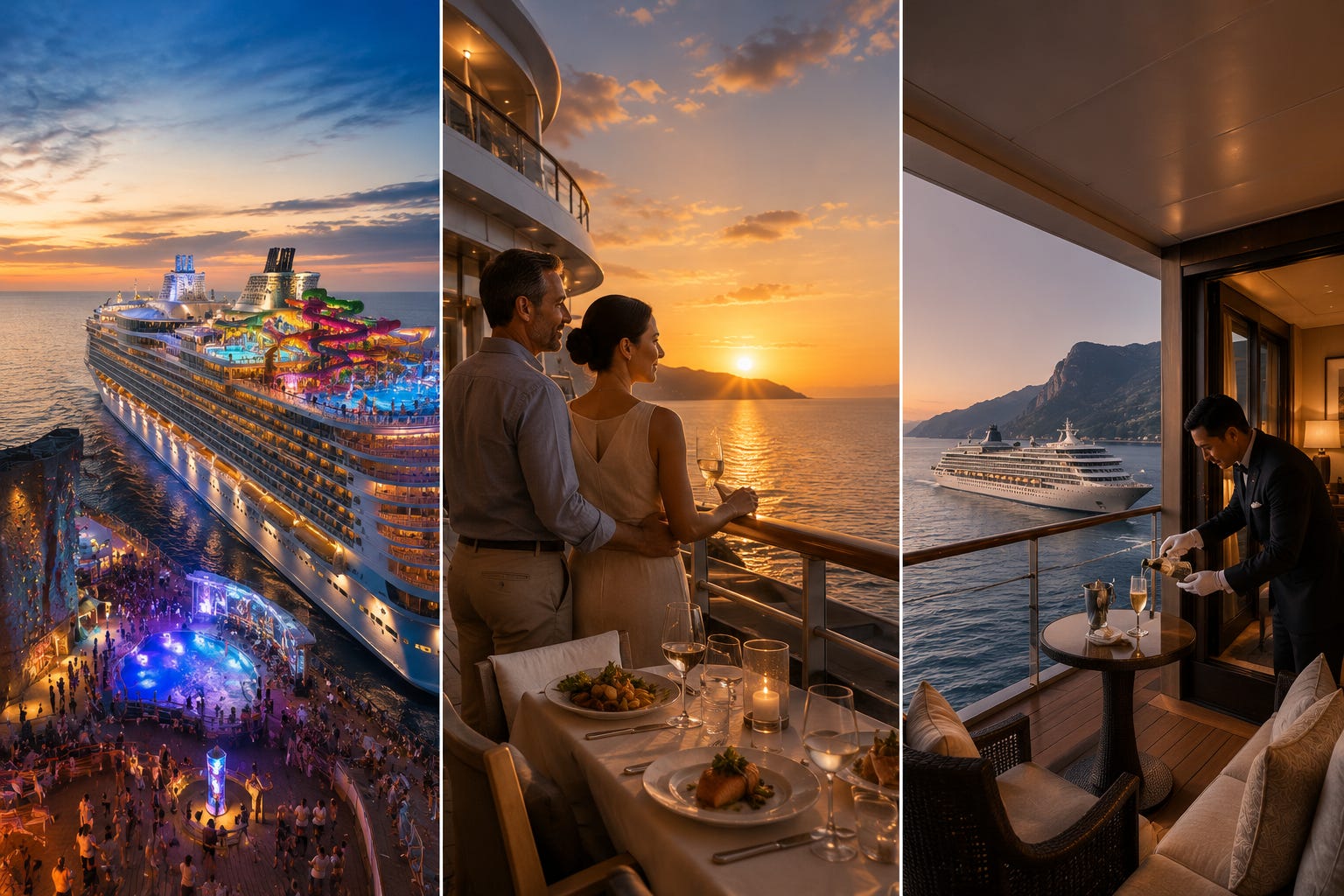
When most clients say “cruise,” this is what they picture. Large ships, warm waters, multiple ports of call, everything included.
But ocean cruising is not one product. It’s a spectrum.
At one end you have the mega-ships: Royal Caribbean, MSC, Carnival. These floating cities carry thousands of passengers, offer Broadway-style shows, surf simulators, and enough dining options to eat somewhere different every night. Perfect for families, first-timers, and clients who want maximum value for their dollar.
Move up the spectrum and you find premium lines: Celebrity, Holland America, Princess. Slightly smaller ships, more refined experience, better cuisine, a crowd that tends to travel more often and spend more per booking.
At the top end sits luxury: Silversea, Seabourn, Regent Seven Seas. Ultra-small ships, all-inclusive pricing that actually means all-inclusive, and an experience that competes with the finest land-based resorts. High ticket price, high commission, clients who book year after year.
One category. Endless opportunities.
River Cruises: Small ships, big experience
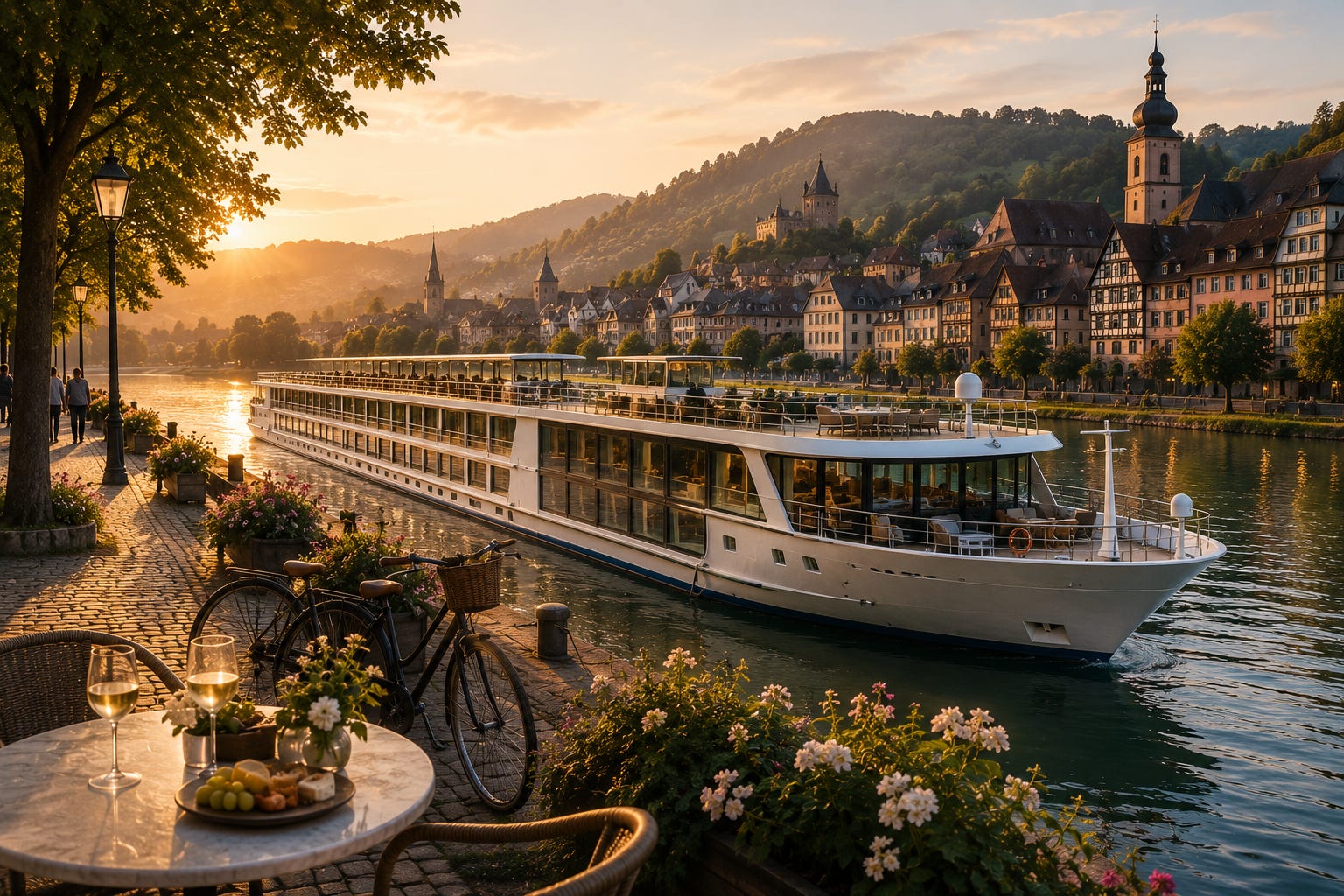
River cruising is one of the fastest-growing segments in the industry, and it’s easy to understand why.
Imagine waking up in the heart of Amsterdam, then falling asleep docked in Cologne. No tenders, no ports far from the action, no sea days. Just you, a ship that holds 100 to 200 passengers, and some of the most storied landscapes in the world.
The Rhine, the Danube, the Mekong, the Nile, the Amazon. River cruising takes clients to places a big ship simply cannot go.
The typical river cruise client is 50+, well-traveled, culturally curious, and willing to spend. They’re not looking for a waterslide. They’re looking for the medieval village, the wine tasting in Burgundy, the sunrise over the temples of Luxor.
Companies to know: AmaWaterways, Viking River Cruises, Uniworld, Avalon Waterways.
This is a product that sells itself once a client understands it. Your job is to introduce them to it.
Expedition Cruises: For the clients who want the world’s last wild places
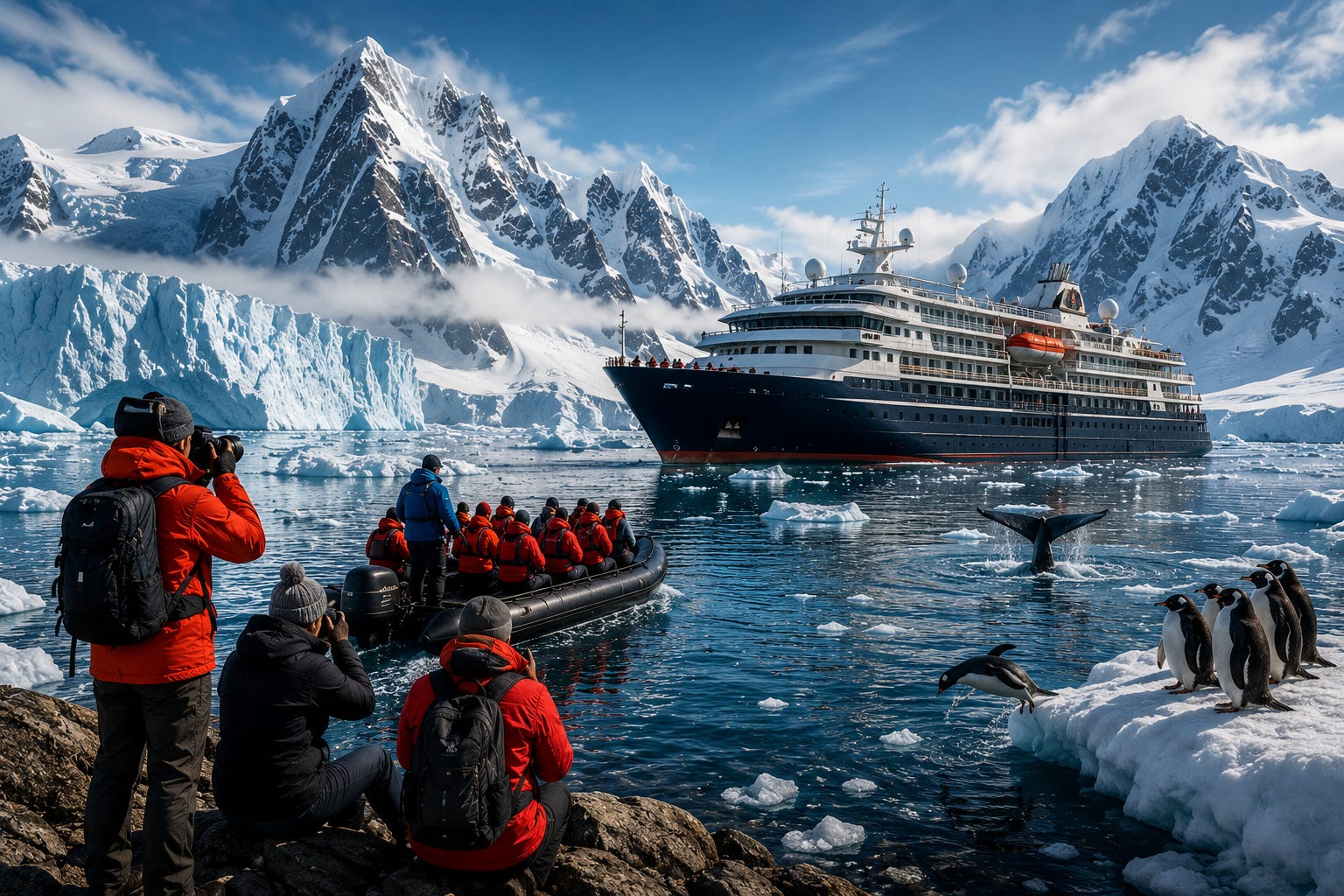
This is the segment that surprises agents the most, because the price tags are high, the ships are small, and the clients are extraordinarily loyal.
Expedition cruising takes passengers to places most people will never see: Antarctica, the Galápagos, the Norwegian fjords, the Canadian Arctic, Papua New Guinea. The ships carry anywhere from 50 to 300 passengers, are built to navigate extreme conditions, and come equipped with Zodiacs, kayaks, and onboard scientists and naturalists.
These are not passive vacations. Clients get off the ship every single day, often twice. They see penguins, polar bears, and volcanic landscapes. They come home with stories that last a lifetime.
The expedition client is adventurous, educated, environmentally conscious, and not afraid to invest in an experience. Average spend per person can reach $15,000 to $30,000 or more for premium expedition voyages.
Companies to know: Hurtigruten, Ponant, Quark Expeditions, Lindblad, Aurora Expeditions.
If you have even one client who loves nature, wildlife, or adventure travel, expedition cruising should be part of your conversation.
Why this matters for you
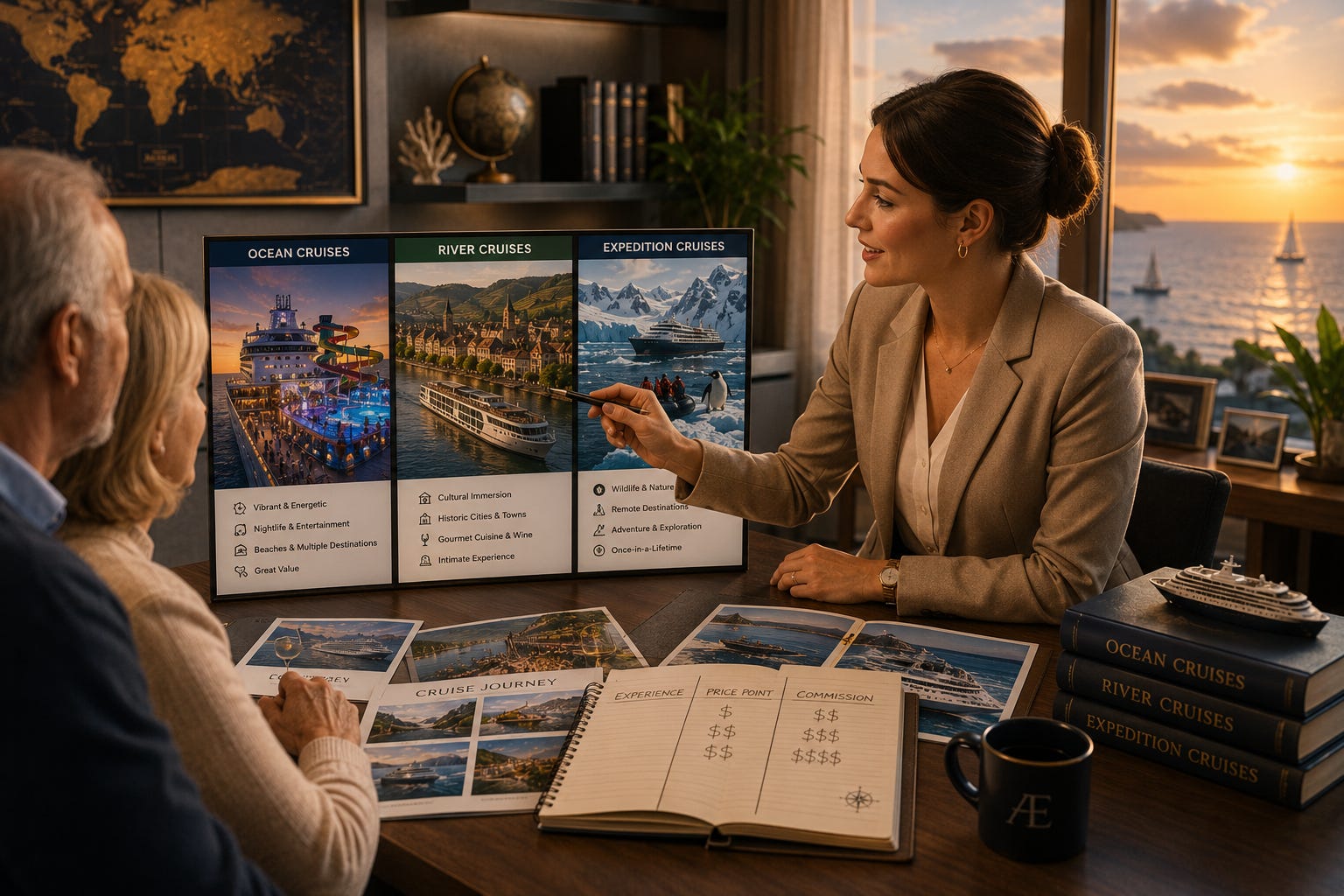
Every client who walks through your door, or calls, or emails, has a cruise that fits them perfectly. Your job is to match the product to the person.
The client who wants nightlife and beaches? Ocean cruise, mass market line. The retired couple who loves history and wine? River cruise, European itinerary. The wildlife photographer who’s been everywhere? Expedition cruise, Antarctica.
Three very different experiences. Three very different price points. Three very different commissions.
This is what cruise specialization looks like in practice.
Want to go deeper? Subscribe to ÆRIA Voyages Academy for in-depth guides on cruise lines, destinations, sales techniques, and the practical tools that help you sell more cruises, more confidently.
Everything you need to sell more cruises is one click away.
ÆRIA Voyages Academy
Let’s Go further Together